
Designing a Blue Ridge Photography Workshop: Structure Behind the Art
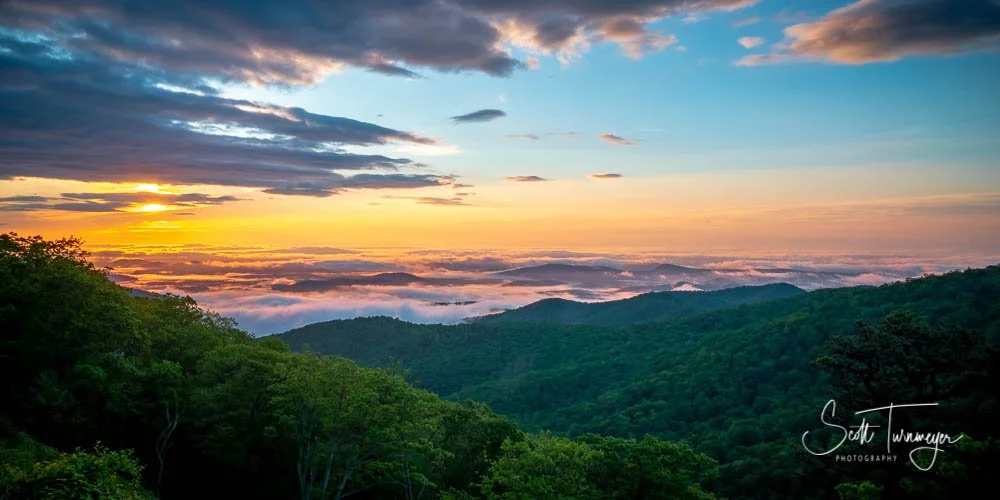
Sunrise breaking over the Blue Ridge Mountains near Front Royal, Virginia.
When people attend one of my Blue Ridge photography workshops, they see sunrises, waterfalls, ridgelines, and light breaking across the Shenandoah Valley.
What they don’t see is the structure behind the art.
A successful photography workshop isn’t just about knowing where to stand when the light hits. It’s about intentional design — crafting an experience that balances creativity, instruction, logistics, psychology, and momentum.
Here’s what actually goes into building one.

Early light creates contrast, depth, and decision-making opportunities.
It Starts With the Outcome, Not the Location
Most people design workshops backwards.
They start with:
“Let’s go shoot at XYZ overlook.”
I start with:
“What transformation should this photographer walk away with?”
Every workshop I design begins with clarity around one of three outcomes:
Technical Mastery (Manual mode confidence, understanding light, lens selection)
Creative Expansion (Composition, storytelling, emotional depth)
Environmental Control (Shooting in wind, low light, waterfalls, night sky)
Only after the outcome is clear do I select the environment.
A sunrise at the Blue Ridge Mountains isn’t just pretty — it’s a controlled learning lab for dynamic range, foreground interest, and decision-making under time pressure.
Environment as a Teaching Tool
The Blue Ridge Mountains are perfect because they offer controlled complexity.
In a single morning, participants can encounter:
Changing light temperature
Atmospheric haze
High dynamic range scenes
Leading lines in ridgelines
Foreground framing with rock and foliage
Wind movement in trees
Nature becomes the curriculum.
I’m not teaching from slides. I’m teaching from the land.

Layered light and atmospheric depth at dawn in the Shenandoah Valley.
Timing Is Strategic
There’s psychology behind the schedule.
For example, sunrise workshops work because:
Participants arrive focused (it’s early — no distractions)
Light changes force decision-making
The shared experience builds camaraderie quickly
Success happens early in the day
Workshops are structured in phases:
Orientation (10–15 min)
Quick expectation setting. Lens choice. Exposure reminders. Composition cues.Guided Execution (45–60 min)
I walk through positioning, framing, adjustments, and why we’re making decisions.Independent Application (30–45 min)
Participants experiment while I coach individually.Debrief & Reinforcement
We talk about what worked, what didn’t, and what to refine next time.
That rhythm matters.
Too much lecture kills creativity.
Too little structure creates frustration.
The balance is everything.
Limiting Group Size for Depth
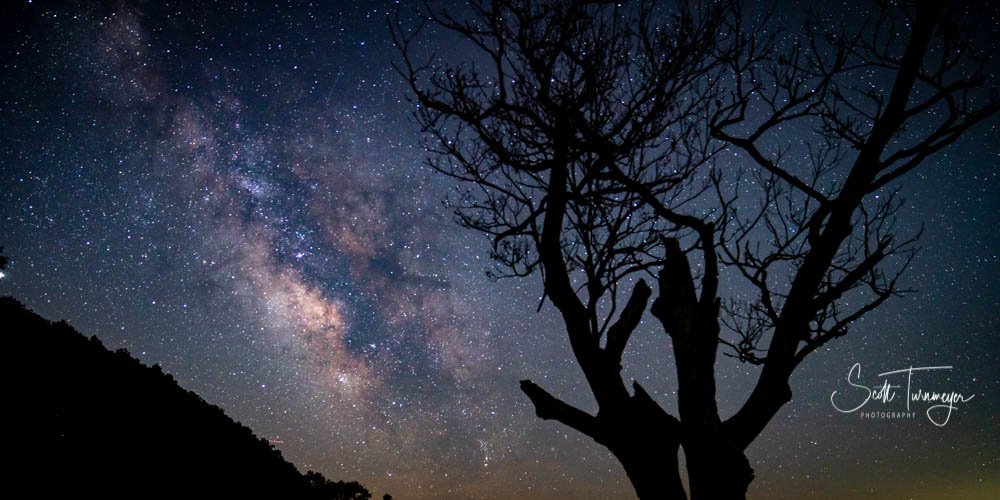
Night sky workshop session under the Milky Way in the Blue Ridge.
I intentionally keep workshops small.
Why?
Because photography is personal.
A group of 9 allows:
Individual attention
Real-time exposure troubleshooting
Composition feedback specific to each person’s eye
Adjustments based on confidence level
If someone is struggling with shutter speed, I fix that.
If someone is ready to push into artistic risk, I challenge them.
Structure creates freedom.
Planning for Variables (Weather, Skill, Energy)
The mountains are unpredictable.
So are people.
Before every workshop, I have contingency paths:
Cloud cover plan
Harsh light plan
Fog plan
Wind plan
Equipment failure backup
Creatively, I also plan multiple composition angles at each location. If one scene doesn’t inspire someone, there’s another option within walking distance.
A well-designed workshop removes friction.
Participants should feel stretched — not stressed.

Weather shifts create unexpected drama — always part of the plan.
Instruction Beyond the Camera
Technical instruction is only part of it.
The real shift happens when photographers start seeing differently.
During workshops, I teach:
How to slow down before shooting
How to evaluate light direction before lifting the camera
How to simplify a scene
How to eliminate distractions
How to tell a story instead of just capturing a view
This is where art begins.
The mountains are beautiful. But the goal isn’t to photograph beauty — it’s to interpret it.
The Debrief Is Where Growth Happens
Many workshops end when the sun gets high.
Mine don’t.
I encourage participants to:
Review their images the same day
Identify one technical win
Identify one compositional improvement
Edit intentionally, not automatically
Share their work for feedback
Growth compounds when reflection is built into the structure.
Why Structure Matters

Controlled environments like waterfalls teach exposure, motion, and patience.
People often romanticize creativity.
But creativity without structure becomes chaos.
Structure without creativity becomes mechanical.
The sweet spot is engineered freedom — a framework strong enough to support experimentation.
That’s how I design Blue Ridge photography workshops.
There’s art in the sunrise.
There’s structure in the experience.
And when the two align, photographers leave not just with better images — but with better vision.
Final Thought
The Blue Ridge Mountains offer more than scenic overlooks. They offer an ever-changing classroom.
If you’ve ever wanted to move beyond auto mode, understand light at a deeper level, or create images that feel intentional rather than accidental, that’s what these workshops are built for.
Not just beautiful photos.
But transformation behind the lens.