
Measuring Tourism Success Beyond Visitor Numbers
Measuring Tourism and Destination Success Beyond Visitor Numbers
For decades, many communities have judged the success of their tourism programs with one simple question:
How many visitors did we attract?
While visitor counts certainly matter, they tell only a small part of the story.
The communities that consistently build stronger local economies don't simply chase more visitors. They focus on creating places where people want to spend more time, spend more money, and eventually decide to return. Even more importantly, they create places where residents are proud to live.
That shift—from measuring tourism to measuring destination success—is where the real opportunity begins.
Visitor Numbers Are Just One Metric
Imagine two destinations.
The first attracts one million visitors each year who stop for an hour, buy gas, and continue driving.
The second attracts 600,000 visitors who stay for three days, eat at local restaurants, shop at independent businesses, attend events, and return again the following year.
Which destination is actually more successful?
If your only measurement is visitor count, the first destination appears to be winning.
But if your goal is economic development, tax revenue, business growth, and quality of life, the second destination is creating significantly more value.
That is why destination organizations around the country are shifting away from simply counting visitors and toward understanding visitor behavior.
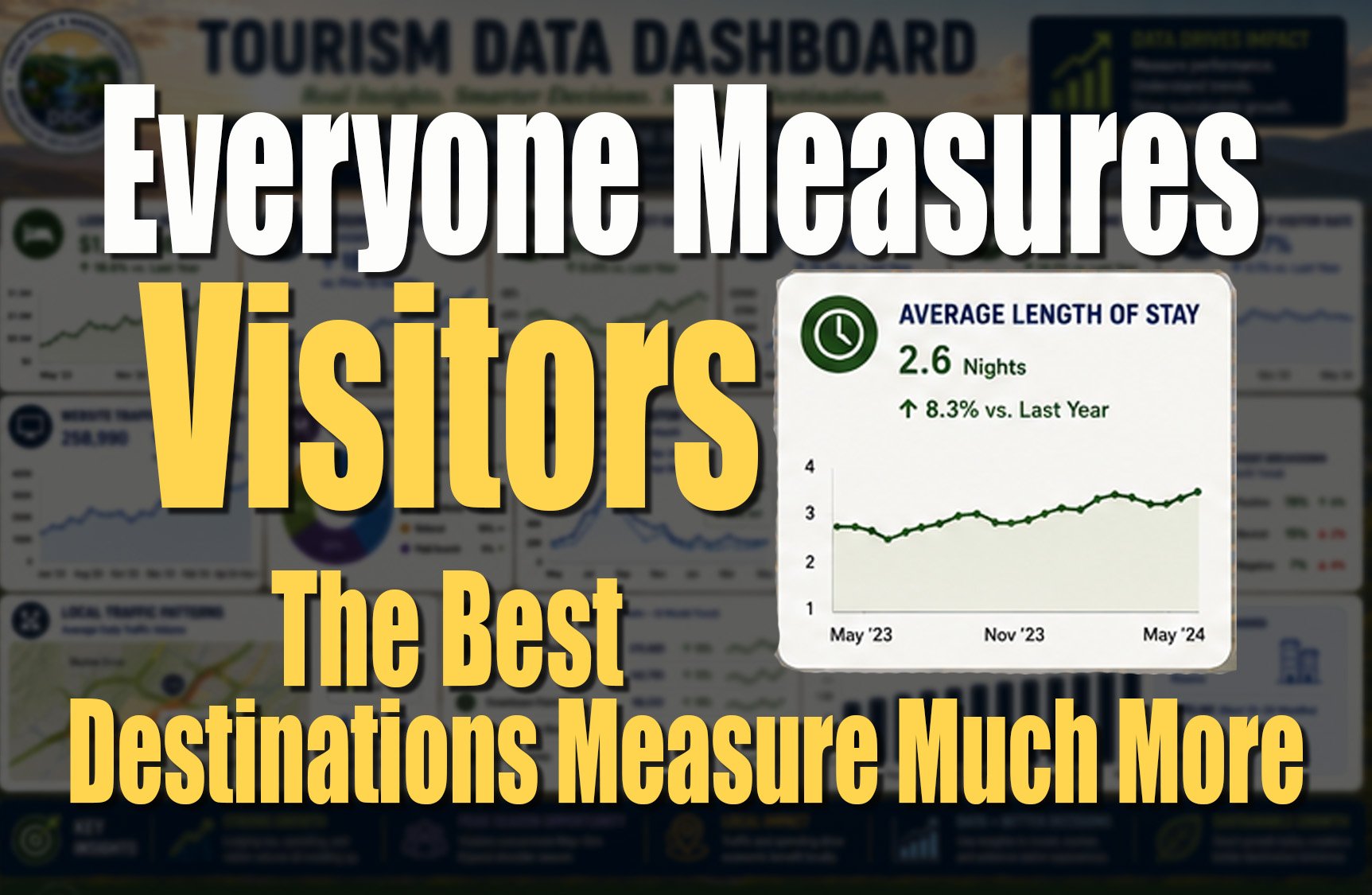
Length of Stay May Be More Important Than Visitor Count
One of the most valuable tourism metrics is average length of stay.
Every additional night a visitor spends in your community creates opportunities for:
Hotel stays
Restaurant visits
Shopping
Entertainment
Outdoor recreation
Fuel purchases
Museum admissions
Local attractions
Every additional day also creates additional opportunities for visitors to discover businesses they never planned to visit.
Communities should constantly ask:
"What gives someone one more reason to stay another night?"
Sometimes the answer is an event.
Sometimes it's an evening concert.
Sometimes it's a connected downtown.
Sometimes it's simply having enough things to do.
Visitor Spending Matters More Than Visitor Volume
Not every visitor contributes equally to the local economy.
Understanding visitor spending patterns provides far more insight than simply knowing how many people crossed your county line.
Questions worth measuring include:
Average spending per visitor
Spending by category
Average lodging expenditure
Restaurant spending
Retail purchases
Attraction admissions
Outdoor recreation spending
These numbers reveal where tourism dollars are flowing—and where opportunities exist to strengthen local businesses.
Resident Satisfaction Should Be a Tourism Metric
This surprises many people.
The health of a destination isn't measured only by tourists.
It is measured by residents.
If locals avoid downtown because traffic is unbearable, parking is impossible, or events no longer feel welcoming, something has gone wrong.
Successful destination development improves life for residents first.
When sidewalks become safer...
When parks improve...
When trails expand...
When downtown storefronts are occupied...
Residents benefit every day.
Visitors simply enjoy those same improvements during their stay.
Tourism should never come at the expense of the people who call a place home.
Business Growth Is a Leading Indicator
A thriving destination creates opportunity for entrepreneurs.
Ask yourself:
Are new restaurants opening?
Are locally owned retailers expanding?
Are outfitters growing?
Are breweries investing?
Are lodging options increasing?
Are downtown vacancies shrinking?
These trends often reveal far more about the health of a destination than visitor counts alone.
Strong tourism ecosystems support small business success.
Repeat Visitors Are the Ultimate Vote of Confidence
Attracting first-time visitors requires marketing.
Creating repeat visitors requires delivering an exceptional experience.
Repeat visitation often signals that a destination is building long-term loyalty rather than relying solely on advertising.
Communities should work toward answering questions like:
How many visitors return?
How often do they return?
What experiences bring them back?
What season do they visit?
Returning visitors become ambassadors.
They recommend your community to family and friends.
That word-of-mouth marketing is incredibly valuable.
Quality of Life Is Economic Development
One of the biggest misconceptions in tourism is that visitor investments only benefit visitors.
In reality, quality-of-life improvements often become economic development tools.
Better parks help recruit employees.
Improved trails attract outdoor enthusiasts who later relocate.
Walkable downtowns encourage entrepreneurship.
Public art creates community identity.
River access attracts recreation businesses.
When you improve a place for residents, you naturally improve it for visitors as well.
That's why destination development and economic development should never operate independently.
They're partners.
Tourism Return on Investment Should Be Measured
Communities invest millions of dollars into tourism marketing, events, visitor centers, infrastructure, and destination branding.
The obvious question becomes:
What did we get in return?
ROI isn't just hotel tax collections.
It includes:
Increased sales tax revenue
Business investment
New jobs
Property value growth
Small business expansion
Event attendance
Visitor spending
Downtown occupancy
Resident satisfaction
Looking at these metrics together paints a far more complete picture of success than visitor numbers alone.
Data Should Drive Better Decisions
Modern tourism organizations have access to more information than ever before.
Mobile location data.
Hotel performance.
Retail spending.
Website analytics.
Social media engagement.
Search trends.
Visitor surveys.
Economic impact studies.
The goal isn't collecting data for the sake of collecting data.
It's using that information to make smarter investments.
Which campaigns generated overnight visitors?
Which events created the highest spending?
Which attractions encouraged longer stays?
Which experiences produced repeat visits?
Good data helps communities spend their limited marketing dollars more effectively.
A Successful Destination Is More Than a Busy Destination
At the end of the day, tourism isn't about filling parking lots.
It's about creating communities where businesses thrive, residents are proud to live, visitors want to return, and investment continues to grow.
Those outcomes can't be measured with a single visitor count.
They require a broader view of destination success.
When communities begin measuring the full visitor economy—not just the number of people passing through—they make better decisions, build stronger local economies, and create places that people remember long after they've gone home.
That's the difference between promoting a destination and developing one.
More from Scott Turnmeyer
I write about photography, business, mindset, bowling, and the bigger questions that don’t always have easy answers. You can explore more articles, photography, and projects here:
Blog Home
About Scott Turnmeyer
Fine Art Photography
Photography Workshops & Experiences
Digital Consulting