
The Convenience Economy and Small Town Survival
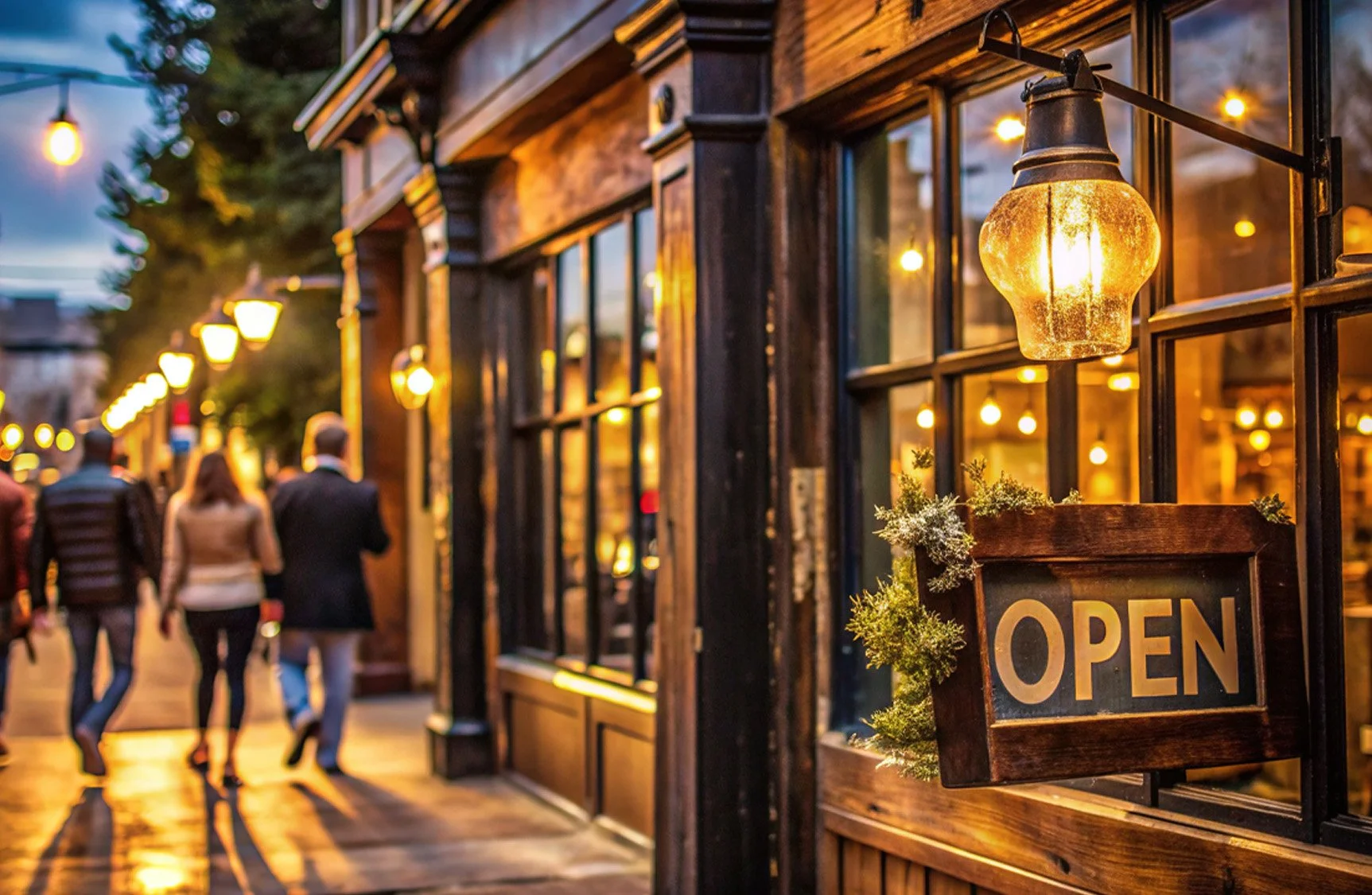
One of the biggest changes reshaping small towns today is something most people rarely think about directly:
convenience.
Not tourism.
Not manufacturing.
Not taxes.
Not population growth.
Convenience.
Over the last twenty years, consumer behavior has changed dramatically.
People increasingly expect:
same-day delivery
online shopping
instant information
one-click ordering
chain consistency
mobile ordering
drive-thrus
streaming entertainment
and frictionless experiences everywhere they go
This shift has quietly transformed how people spend money, where they spend time, and how communities survive economically.
And small towns are feeling the pressure.
Convenience Is One of the Most Powerful Economic Forces Today
Most consumers are not intentionally trying to hurt small businesses or downtown districts.
They are optimizing for:
time
simplicity
efficiency
and convenience
That’s understandable.
Modern life feels busy and exhausting for many people.
If someone can:
click a button
avoid traffic
avoid uncertainty
save time
and get exactly what they want quickly
…many people will choose that option repeatedly.
Even if they genuinely care about local businesses.
Small Towns Were Built Around Different Consumer Habits
Historically, small towns functioned because people lived, worked, shopped, and socialized locally.
Downtowns were not just shopping districts.
They were community centers.
People visited:
hardware stores
pharmacies
clothing stores
restaurants
barber shops
movie theaters
and local businesses
because those places were woven into everyday life.
The modern convenience economy changed that relationship dramatically.
The Internet Did Not Just Change Shopping
One of the biggest misunderstandings is thinking the convenience economy is only about Amazon or online shopping.
It’s much bigger than that.
The internet changed:
expectations
attention spans
decision-making
travel behavior
entertainment
and how people interact with physical places
Today, people often expect communities themselves to feel frictionless.
If parking feels confusing, people may leave.
If information is hard to find online, visitors may skip the destination entirely.
If businesses have inconsistent hours or weak digital presence, consumers move on quickly.
That may feel unfair.
But it is the reality communities now compete within.
Small Towns Are Now Competing Against Entire Systems
This is where the challenge becomes difficult.
Small towns are no longer simply competing against neighboring towns.
They are competing against:
massive e-commerce systems
convenience chains
logistics networks
streaming entertainment
social media
and consumer habits built around instant gratification
That is an incredibly difficult environment for traditional downtowns and small independent businesses.
Especially if communities do not adapt strategically.
Experience Is Becoming More Valuable Than Convenience
Ironically, the same convenience economy creating pressure on small towns may also be creating opportunity.
Because as life becomes increasingly digital and transactional, people are beginning to crave:
authenticity
experiences
walkability
local character
nature
community
slower environments
and places that feel human again
That is one reason tourism, downtown revitalization, outdoor recreation, and destination development have become increasingly important.
People are searching for experiences they cannot get through a screen.
This Is Why Small Town Identity Matters
Small towns that survive long-term usually understand something important:
They cannot out-convenience Amazon.
They cannot out-scale large metro areas.
They cannot out-compete massive logistics systems.
So trying to become a smaller version of everywhere else usually fails.
Instead, successful small towns often lean harder into:
authenticity
local identity
outdoor recreation
tourism
community experience
unique businesses
events
walkability
and quality of life
Those are competitive advantages large systems struggle to replicate.
Digital Presence Still Matters Enormously
At the same time, communities cannot simply reject the modern economy either.
Digital visibility matters more than ever.
People discover destinations through:
Google searches
social media
blogs
videos
travel guides
and online reviews
If small towns are difficult to discover digitally, many potential visitors will never arrive in the first place.
This is why destination marketing, tourism funnels, and online storytelling matter so much now.
Front Royal and the Shenandoah Valley Already Have Important Advantages
Areas like Front Royal and the broader Shenandoah Valley already possess many of the qualities people increasingly search for today:
mountain scenery
outdoor recreation
small-town character
rivers
local businesses
slower pace
and natural beauty
Those are not small advantages anymore.
In many ways, they are becoming more valuable as modern life becomes increasingly fast, digital, and disconnected.
The Communities That Survive Will Adapt
The convenience economy is not going away.
Consumer behavior has fundamentally changed.
The question is not whether small towns can return to the past.
They can’t.
The real question is whether communities can adapt while still preserving the things that make them unique.
The towns that survive long-term will likely be the ones that:
embrace strategic tourism
strengthen local identity
improve digital visibility
create memorable experiences
support entrepreneurship
and give people reasons to physically visit instead of simply scrolling past
Final Thought
Small towns are not losing solely because people stopped caring.
They are competing against systems specifically designed around convenience, efficiency, and consumer behavior.
That is an enormous challenge.
But communities that understand this shift — and build around experience, identity, authenticity, and connection — may still have something increasingly valuable in a world that often feels more impersonal every year.
More from Scott Turnmeyer
I write about photography, business, mindset, bowling, and the bigger questions that don’t always have easy answers. You can explore more articles, photography, and projects here:
Blog Home
About Scott Turnmeyer
Fine Art Photography
Photography Workshops & Experiences
Digital Consulting