
Designing Main Street for a Convenience Economy
Part of a Series on Small Town Economic Development
This article is part of an ongoing series exploring tourism, downtown challenges, and economic development in small towns.
Walkable retail districts and historic main streets were built around regular foot traffic — local errands, weekly grocery runs, spontaneous browsing, and casual dining. That daily rhythm used to sustain small businesses.
But today’s consumer behavior has shifted in observable, measurable ways — and ignoring that doesn’t preserve Main Street. It slows adaptation. If we’re honest about the trends, we can design structures that work within them instead of hoping they reverse.
The Convenience Economy Is Not a Fad — It’s Structural
Online shopping is no longer peripheral — it’s a core part of how Americans buy.
According to the most recent U.S. Census Bureau data, e-commerce accounted for roughly 16.3% of total retail sales in 2025, meaning about 1 in 6 retail dollars is now spent online.
E-commerce continues to grow year over year — rising an estimated 5.1% in Q3 2025 alone, while total retail sales rose less than that same period.
Online grocery shopping — once a pandemic acceleration — isn’t retreating. Forecasts suggest online grocery could grow nearly 9% annually through 2029, with roughly 61% of U.S. households adopting some form of online grocery use.
These are not niche behaviors — they are widespread and persistent.
Convenience Changes Daily Frequency
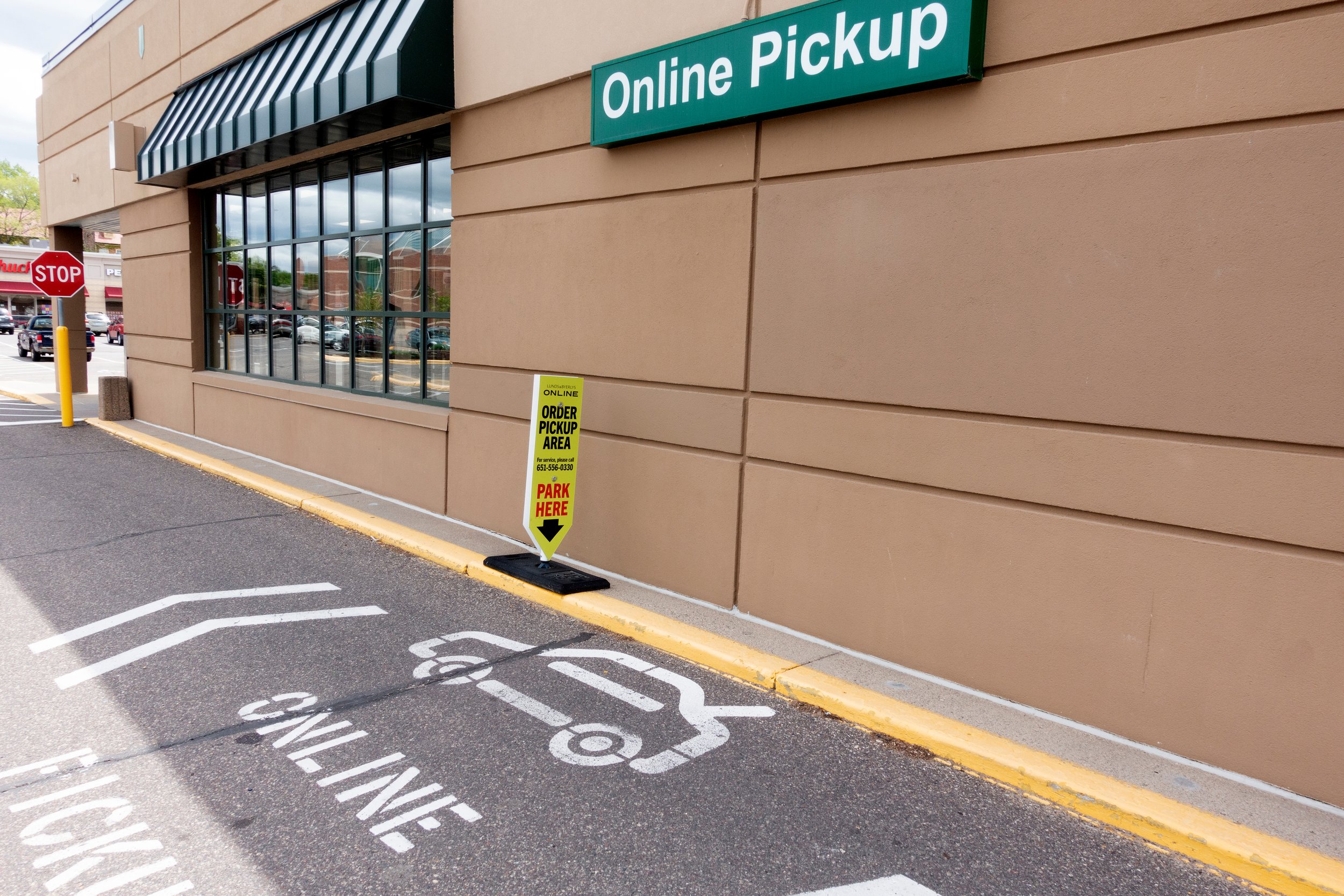
When consumers can order groceries online, schedule pickup at big-box retailers, and browse thousands of products from their phones, it changes how they move through their week.
Convenience isn’t moral decline.
It’s rational optimization.
People allocate their limited time where it feels most efficient:
Online browsing replaces in-store browsing.
Pickup replaces unplanned errands.
Delivery replaces impulse shopping.
Many big retailers are investing directly in hybrid models that support this shift — expanding physical footprints while reinforcing digital convenience.
Events Don’t Replace Weekday Frequency
Most small towns feel this pattern:
— Big crowds around parades, festivals, and special events.
— Quiet days outside of those weekends.
That proves two things:
People value the district.
They make an effort to visit for experiences — not errands.
But events are episodic.
They don’t sustain consistent economic activity year-round.
Main Street can’t run on events alone.
Tourism Isn’t Nostalgia — It’s Structural Demand
Tourists behave differently from locals.
When people travel:
They walk.
They explore.
They seek local flavors.
They spend time browsing.
They allocate time to experience — not “get and go.”
Tourism spending remains a resilient component of the U.S. retail economy. Total U.S. travel spending was projected to be about $1.35 trillion in 2025, led by domestic leisure travel.
That’s a large structural pull of dollars that doesn’t depend on local daily errands.
If Main Street experiences decline because local convenience habits have shifted, tourism provides an external demand anchor that is not dependent on the same convenience calculus.
The Structural Gap: Local Frequency vs. External Demand
Main Streets historically depended on locals to supply everyday foot traffic. Now that some of that demand is moving online or into hybrid retail models, districts must ask:
What replaces that frequency on 350+ days per year?
Tourism.
Destination experiences.
Curated walkable districts that give people — out-of-town and local — a reason to come and stay.
Experience — not logistics — becomes the driver.
What This Looks Like in a Real Town
You can see this shift happening in Front Royal, VA, where expectations around convenience are changing how people interact with Downtown Front Royal.
With steady traffic moving through Shenandoah National Park and along Skyline Drive, the opportunity isn’t just getting people into town — it’s making it easy for them to stop, navigate, and engage without friction.
Today’s consumers expect simplicity: clear access, walkable layouts, and businesses that fit into how they already move through an area. If Downtown Front Royal is aligned with that behavior, it captures more of the traffic already passing through. If not, people default to the easiest option — even if it’s somewhere else.
This Isn’t a Defeat — It’s a Pivot
Acknowledging structural change isn’t a surrender.
It’s strategy.
You can’t reverse convenience:
Online shopping continues growing.
Grocery pickup isn’t going away.
Large retailers are optimizing omnichannel models.
But you can design experiences that thrive outside of the convenience economy’s logic.
That means thinking differently about the purpose of Main Street:
From necessity center
To
destination experience economy
The Hard Question
If convenience dictates how locals allocate time…
And tourism dictates how visitors allocate attention…
What does a sustainable Main Street ecosystem look like in 2026 and beyond?
That’s not a complaint.
That’s a systems question.
And it deserves structured debate.
More from Scott Turnmeyer
I write about photography, business, mindset, bowling, and the bigger questions that don’t always have easy answers. You can explore more articles, photography, and projects here:
Blog Home
About Scott Turnmeyer
Fine Art Photography
Photography Workshops & Experiences
Digital Consulting