
What Small Town Conversations Are Missing
Part of a Series on Small Town Economic Development
This article is part of an ongoing series exploring tourism, downtown challenges, and economic development in small towns.
In small towns across America, the same conversations keep happening.
We talk about why businesses are closing.
We talk about why Main Street feels quieter than it used to.
We talk about why younger people leave, why retail is struggling, and why it feels harder than ever to keep things going.
And almost every time, the solutions we discuss sound the same too.
“We need more events.”
“We need more local support.”
“We need people to shop local.”
All of those things matter.
But they are not enough anymore.
What many small-town conversations are missing is a hard truth about how the economy has changed — and why tourism is no longer optional.
It’s necessary.
The Reality: Local Spending Alone Doesn’t Sustain a District Anymore
Small towns used to survive almost entirely on local spending.
People bought clothes locally.
They bought gifts locally.
They ate locally.
They did their banking locally.
They got their photos developed locally.
Today, convenience has replaced geography.
People order online.
They drive to big-box stores.
They shop on their phones at night.
They choose speed over loyalty.
This isn’t because people don’t care about their town.
It’s because modern life is built around convenience.
And once convenience becomes the default, local spending alone cannot support a downtown district the way it once did.
That means something else has to fill the gap.
That something is visitors.
Tourism Is Not About Events — It’s About Daily Economic Flow
One of the biggest misunderstandings in small-town discussions is how tourism actually works.
Tourism is not the same as events.
Events help.
Festivals help.
Concerts help.
But events are temporary spikes.
Tourism, when done right, is steady.
It’s the couple visiting on a Tuesday afternoon.
It’s the family stopping after hiking.
It’s the photographer in town for sunrise.
It’s the traveler who found your town on Google.
It’s the weekend visitor who comes back every year.
Strong districts are not built on one big weekend.
They are built on thousands of small visits.
Sustained visitor spending — day after day, month after month, season after season — is what keeps businesses alive.
The Shift Every Small Town Must Accept
There was a time when a town could say:
“We just need locals to support local.”
That time is gone.
Not because people don’t want to support local.
Because the economy changed.
Retail changed.
Travel changed.
Technology changed.
Habits changed.
And when habits change, the survival strategy has to change too.
Today, successful small towns understand something very clearly:
You need locals.
You need visitors.
You need both.
Without visitors, there is not enough spending.
Without spending, there is no district.
Without a district, there is no place for locals to support.
Tourism Is an Economic Strategy, Not a Marketing Slogan
Another mistake small towns make is treating tourism like a side project.
Tourism isn’t just advertising.
It’s economic development.
Tourism supports:
Retail
Restaurants
Hotels
Gas stations
Photographers
Guides
Artists
Event venues
Service businesses
Real estate
Local taxes
Infrastructure
Every visitor dollar spreads.
When someone comes to town, they don’t spend money in one place.
They spend it everywhere.
That ripple effect is what makes tourism powerful.
Not the event itself.
Not the brochure.
Not the social media post.
The spending.
The District Has to Be Worth Visiting
Tourism alone doesn’t fix anything.
You can’t market your way out of a weak district.
Visitors come when there is something to experience.
Walkable streets.
Unique shops.
Good food.
Things you can’t get online.
Places that feel different from everywhere else.
Tourism works when the district is strong enough to hold attention.
That means investment matters.
Storefronts matter.
Signage matters.
Clean streets matter.
Hours matter.
Consistency matters.
You can’t invite visitors to a place that isn’t ready for them.
And you can’t expect visitors to come back if there isn’t something worth returning for.
The Conversation Needs to Change
Small towns don’t fail because people stop caring.
They struggle because the conversation stays stuck in the past.
We talk about how things used to work.
We talk about what people should do.
We talk about what we wish would happen.
But the towns that survive are the ones that talk about what is actually happening.
And what is happening is this:
Convenience has taken local spending.
Tourism can replace part of it.
Only if we take it seriously.
Not as an event.
Not as a slogan.
As a long-term economic strategy.
What This Looks Like in a Real Town
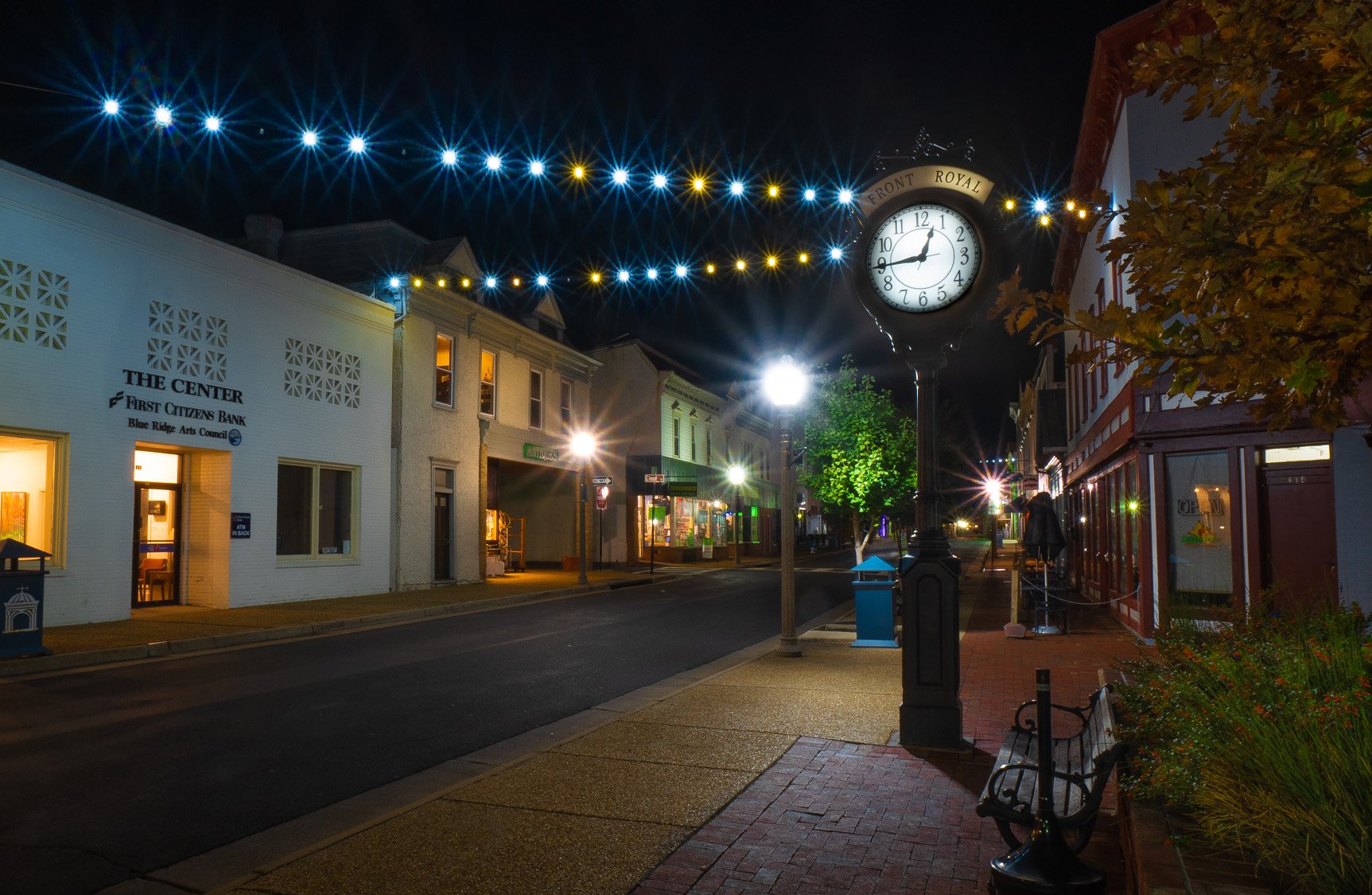
You can see this gap in Front Royal, VA, where many of the same conversations are happening — but not always focused on the outcomes that actually drive growth.
With consistent traffic flowing through Shenandoah National Park and along Skyline Drive, there’s a clear opportunity sitting right outside the door. But if that doesn’t translate into activity within Downtown Front Royal, the bigger picture gets missed.
The conversations often center around symptoms — parking, events, individual projects — instead of the systems that connect everything together. Until that shift happens, it’s easy to stay busy without actually moving forward.
The Future of Small Towns Will Belong to Places That Adapt
The towns that grow over the next twenty years won’t be the ones that hope things go back to the way they were.
They will be the ones that understand what the new economy requires.
They will build districts worth visiting.
They will welcome visitors without resentment.
They will support local businesses while attracting outside spending.
They will think long-term instead of seasonal.
And they will stop asking:
“How do we get people to shop local?”
And start asking:
“How do we make this place strong enough that people want to come here?”
That is the conversation small towns need to have.
And many still aren’t.
More from Scott Turnmeyer
I write about photography, business, mindset, bowling, and the bigger questions that don’t always have easy answers. You can explore more articles, photography, and projects here:
Blog Home
About Scott Turnmeyer
Fine Art Photography
Photography Workshops & Experiences
Digital Consulting